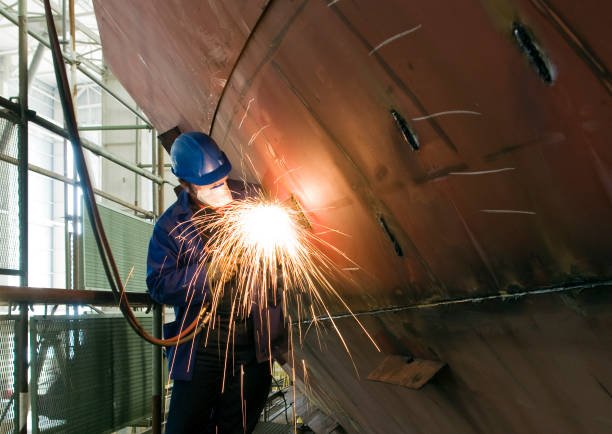
For foreign job seekers, welding jobs with visa sponsorship in Germany provide an opportunity to work legally while receiving support from an employer during the immigration process. Companies in industries such as construction, shipbuilding, metal fabrication, machinery production, and automotive manufacturing regularly recruit workers with welding experience.
Whether you are an experienced MIG welder, TIG welder, arc welder, or metal fabrication specialist, Germany may offer suitable employment opportunities.
However, getting a welding job from outside Germany requires more than submitting a CV. You need to understand employer requirements, work permits, qualifications, salary expectations, and the recruitment process.
This guide explains how foreigners can find welding jobs in Germany, which employers to target, what qualifications they need, and how to apply for positions that may offer visa sponsorship.
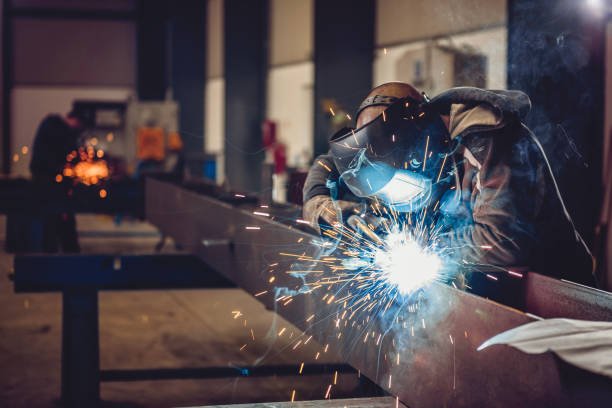
Why Germany Needs Foreign Welders
Germany has one of Europe’s strongest industrial economies. Its manufacturing companies produce vehicles, industrial machinery, metal structures, ships, equipment, and engineering components for domestic and international markets.
These industries depend on skilled welders to assemble, repair, and maintain metal products.
Several factors create employment opportunities for international welding professionals.
1. Strong manufacturing industry
Germany has a large manufacturing sector that depends on metalworking professionals. Automotive manufacturers, machinery producers, and industrial engineering companies require welders who can work with different metals and welding techniques.
2. Construction and infrastructure projects
Construction companies need welders to assemble steel frameworks, install metal structures, repair pipelines, and complete industrial projects. Experienced structural welders can find opportunities in different regions.
3. Demand for specialised welding skills
Employers often look for professionals who understand advanced welding methods, including TIG, MIG/MAG, and flux-cored arc welding. Workers with experience in stainless steel, aluminium, and heavy structural materials can have an advantage.
4. International recruitment
Some German employers consider applicants from outside the European Union when they cannot fill particular vacancies locally. This creates opportunities for qualified foreign workers who meet the immigration and employment requirements.
5. Career development
Working in Germany can expose welders to modern equipment, international safety standards, advanced manufacturing processes, and opportunities to improve their technical skills.
Types of Welding Jobs Available in Germany for Foreigners
Germany has different welding positions across its industrial and commercial sectors. The right opportunity depends on your experience, technical knowledge, qualifications, and ability to work with specific materials.
Here are some welding occupations worth exploring.
1. MIG Welder
MIG welding is widely used in manufacturing, automotive production, metal fabrication, and industrial assembly.
MIG welders join metal components using a continuously fed wire electrode and shielding gas. Employers may recruit workers who can operate welding machines, interpret technical drawings, prepare materials, and produce accurate welds.
Typical responsibilities include:
-
Joining metal components according to technical specifications.
-
Operating MIG welding equipment.
-
Preparing metal surfaces before welding.
-
Inspecting completed welds for defects.
-
Following workplace safety procedures.
Previous factory or metal fabrication experience can improve your chances of securing this position.
2. TIG Welder
TIG welders perform precise welding tasks where appearance, accuracy, and weld quality matter.
German employers may require TIG specialists for stainless steel components, aluminium structures, industrial equipment, and pipe systems.
Common responsibilities include:
-
Welding stainless steel and aluminium materials.
-
Reading engineering drawings.
-
Controlling heat input during welding.
-
Producing clean and accurate weld joints.
-
Inspecting finished products.
TIG welding experience can make an applicant attractive to employers working with specialised materials.
3. MAG Welder
MAG welding is common in industrial manufacturing and heavy metal fabrication.
Workers use this process to join steel components in factories, construction facilities, and machinery production plants.
Typical duties include:
-
Operating MAG welding machines.
-
Welding structural steel components.
-
Preparing metal parts for assembly.
-
Maintaining consistent weld quality.
-
Checking equipment before use.
Candidates with practical MAG welding experience may qualify for production and fabrication vacancies.
4. Arc Welder
Arc welders use electrical current to create the heat required to join metal materials.
This method is useful in construction, equipment repair, industrial maintenance, and heavy fabrication.
Employers may expect applicants to understand electrode selection, welding positions, material preparation, and quality inspection.
5. Pipe Welder
Pipe welding is a specialised occupation used in industrial plants, energy facilities, manufacturing sites, and pipeline construction.
Pipe welders connect metal pipes that transport water, gas, chemicals, steam, and other materials.
Their responsibilities may include:
-
Welding pipes in different positions.
-
Preparing pipe joints.
-
Reading technical drawings and welding specifications.
-
Performing visual inspections.
-
Following project safety standards.
Employers may request recognised welding certificates and documented experience for these positions.
6. Structural Steel Welder
Structural steel welders help assemble metal frameworks used in buildings, bridges, industrial facilities, and other construction projects.
They must understand welding measurements, fabrication drawings, metal preparation, and structural safety requirements.
Experienced applicants may find opportunities with construction contractors and steel fabrication companies.
7. Aluminium Welder
Aluminium welding requires specialised knowledge because aluminium behaves differently from ordinary carbon steel.
Manufacturers may employ aluminium welders to produce vehicle components, industrial equipment, transport structures, and specialised metal products.
TIG and MIG experience with aluminium can strengthen an application.
8. Welding Fabricator
Welding fabricators combine welding, cutting, measuring, shaping, and metal assembly skills.
They work with different materials to produce finished components according to engineering drawings.
This position may suit applicants who have experience beyond welding alone.
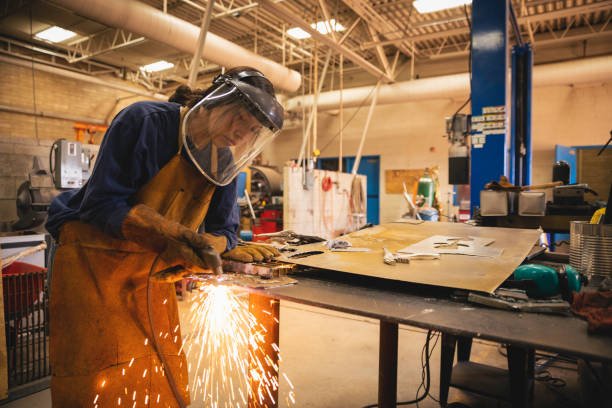
Main Industries Hiring Welders in Germany
Foreign welders should focus their job search on industries that regularly use metal fabrication and industrial joining techniques.
The following sectors offer potential employment opportunities.
1. Automotive Manufacturing
Germany is internationally recognised for automotive production. Vehicle manufacturers and their suppliers need welders to assemble metal components, repair production equipment, and manufacture vehicle structures.
You can explore opportunities with companies such as:
-
BMW Group – Automotive manufacturing and vehicle production.
-
Mercedes-Benz Group – Vehicle manufacturing and industrial production.
-
Volkswagen Group – Automotive assembly and component manufacturing.
-
Robert Bosch – Automotive technology and industrial manufacturing.
These companies and their suppliers may recruit welding professionals directly or through specialist contractors.
2. Shipbuilding Industry
Shipbuilding companies employ welders to construct, maintain, and repair vessels. The work involves joining large metal structures, manufacturing ship components, and carrying out specialised repairs.
Important companies to research include:
-
MEYER WERFT – Shipbuilding and marine engineering.
-
TKMS – Naval shipbuilding and maritime technology.
-
Lürssen – Yacht and naval vessel construction.
Welders with experience in heavy steel fabrication and marine projects may find relevant vacancies in this sector.
3. Construction and Steel Fabrication
Construction contractors require welders to manufacture and install structural steel components. These workers support building projects, industrial facilities, bridges, and infrastructure development.
Potential employers include steel fabrication companies, engineering contractors, and industrial construction businesses.
4. Machinery and Industrial Equipment Manufacturing
Germany has a strong machinery and engineering industry. Manufacturers use welding professionals to produce industrial equipment, machine frames, metal components, and specialised production systems.
Relevant companies to investigate include:
-
Siemens.
-
KUKA.
-
thyssenkrupp.
Not every company listed recruits welders directly or offers immigration assistance. Check individual vacancies and employment conditions before applying.
Welding Jobs with Visa Sponsorship in Germany: What Employers Expect
German employers generally want applicants who can demonstrate practical welding ability, understand workplace safety, and produce reliable results.
Although requirements vary between companies, the following qualifications can improve your chances.
Professional welding experience: Many employers prefer candidates with previous experience in manufacturing, construction, metal fabrication, or industrial maintenance. Your CV should explain the welding methods you have used and the projects you have completed.
Welding certificates: Professional certificates can demonstrate your technical competence. Depending on the position, employers may request qualifications based on EN ISO 9606, AWS, or other relevant welding standards. They may also require practical welding tests.
Technical drawing skills: Welders should understand engineering drawings, measurements, symbols, and fabrication instructions.
Knowledge of different materials: Experience working with carbon steel, stainless steel, aluminium, and other metals can increase your employment options.
Workplace safety knowledge: Employers expect workers to understand protective equipment, ventilation, fire prevention, machine operation, and safe handling of industrial materials.
Communication skills: German language ability can make workplace communication easier. Some international companies may accept English, but applicants should not assume every employer operates in English.
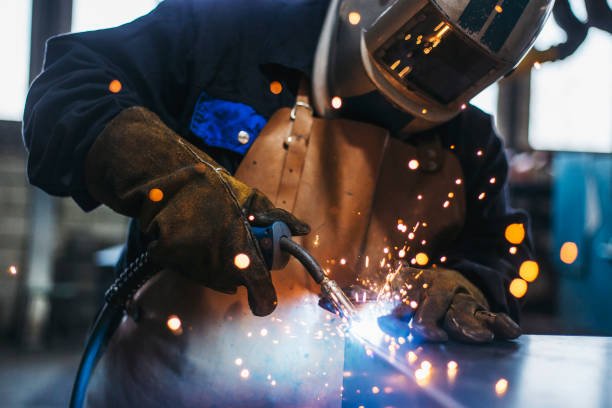
Do You Need German Language Skills to Work as a Welder?
German language skills can improve your chances of finding employment, but the required level depends on the employer and the nature of the position.
Some international manufacturing companies use English in certain departments. However, many workshops, construction sites, and industrial facilities operate primarily in German.
Learning basic German can help you:
-
Understand instructions from supervisors.
-
Communicate with colleagues.
-
Follow safety procedures.
-
Understand technical terms.
-
Participate in workplace training.
-
Handle everyday activities after relocation.
Aim to develop at least A2 or B1 German where possible. Some positions may accept applicants with limited German, while others require stronger communication skills.
If you are applying from abroad, learning German before travelling can make your application more competitive.
Germany Work Visa Options for Foreign Welders
Getting a job offer is an important part of the relocation process, but you must also qualify for an appropriate German residence and work permit.
Germany has several immigration pathways for qualified foreign workers. The most suitable option depends on your vocational training, professional experience, job offer, and qualification status.
1. Skilled Worker Visa for Qualified Professionals
Germany offers a skilled worker residence permit under Sections 18a and 18b of its Residence Act.
This route is available to eligible applicants with recognised vocational qualifications or comparable academic qualifications.
For welders, vocational training in welding, metalworking, or a related occupation may support an application, provided the qualification satisfies the relevant requirements.
You generally need:
-
A recognised or comparable professional qualification.
-
A concrete job offer from a German employer.
-
Employment that qualifies under the immigration rules.
-
A valid passport and the required application documents.
-
Any additional approval required by the relevant authorities.
Your employer may assist with employment documents and other information needed for the application.
2. Visa for a Recognition Partnership
The recognition partnership can help eligible foreign professionals who have secured employment but still need to complete the German recognition process.
Under this arrangement, you can enter Germany and work while your employer supports the recognition procedure.
The main requirements include:
-
A foreign vocational or academic qualification requiring at least two years of full-time training.
-
Recognition of that qualification by the government of the country where you obtained it.
-
A concrete job offer from a suitable German employer.
-
A written agreement with the employer concerning the recognition process.
-
German language proficiency of at least A2.
This route can be useful for qualified welders whose professional credentials still need to undergo the relevant German assessment.
Make It In Germany+1
3. Visa for Professionally Experienced Workers
Germany also provides an immigration pathway for certain experienced professionals who want to work in non-regulated occupations without completing the usual German recognition process.
This option can be relevant to welders because welding is generally a non-regulated occupation.
However, applicants must satisfy specific conditions.
For the standard professionally experienced worker route, these include:
-
A vocational qualification requiring at least two years of training or an eligible academic qualification.
-
Recognition of the qualification by the country where it was obtained.
-
At least two years of relevant professional experience within the previous five years.
-
A qualified job offer in Germany.
-
The applicable minimum salary requirement.
For 2026, the standard annual gross salary threshold is €45,934.20. An applicable collective agreement can affect the salary requirement under the relevant rules.
This is not an automatic route for every welder. You must check whether your qualification, experience, salary, and employment arrangement meet the current conditions.
Make It In Germany+1
4. Opportunity Card (Chancenkarte)
Germany’s Opportunity Card allows eligible non-EU nationals to enter the country to search for suitable employment.
Unlike an employer-sponsored work visa, this route does not require you to secure a job before travelling.
Applicants can qualify through different routes, including recognised qualifications or a points-based system.
Depending on the route, applicants must demonstrate relevant qualifications, language ability, financial resources, and other required conditions.
The Opportunity Card can allow eligible holders to work part-time for up to 20 hours per week and undertake trial employment for up to two weeks per employer.
Once you secure a suitable job, you can explore changing to an appropriate residence permit.
This option may benefit welders who have the financial resources to relocate and search for employment in Germany.
Make It In Germany+1
Important: Visa sponsorship does not mean that an employer can automatically obtain a work permit for anyone. You must meet the requirements of the immigration route that applies to your circumstances.
How Much Do Welders Earn in Germany?
Welding salaries in Germany depend on professional experience, technical specialisation, employer, location, working hours, and the type of industrial project.
Experienced TIG welders, pipe welders, and specialists working on complex fabrication projects may earn more than workers performing basic production welding.
The following figures are illustrative gross monthly salary estimates, not guaranteed offers.
| Welding position | Estimated monthly gross salary |
|---|---|
| Entry-level welder | €2,300–€2,800 |
| MIG/MAG welder | €2,500–€3,300 |
| TIG welder | €2,700–€3,600 |
| Pipe welder | €2,800–€3,800 |
| Structural steel welder | €2,500–€3,400 |
| Aluminium welder | €2,600–€3,500 |
| Experienced welding fabricator | €2,700–€3,700 |
These estimates are intended as general budgeting guidance. Actual earnings can fall outside these ranges, and overtime, shift allowances, collective agreements, and specialist certifications can influence total compensation.
Factors That Influence Welding Salaries
Professional experience: Welders with several years of industrial experience may qualify for better-paying positions than applicants who have recently completed training.
Technical specialisation: Pipe welding, TIG welding, and specialised industrial fabrication can attract higher compensation when employers need those skills.
Location: Salaries differ across German regions because of local labour markets, industrial activity, and employer pay structures.
Employer and industry: Large manufacturers, engineering contractors, and specialised industrial companies may offer different compensation packages.
Working hours: Night shifts, weekend work, overtime, and difficult project conditions may increase overall earnings when the employer provides additional payments.
Additional Benefits Employers May Offer
Apart from monthly salaries, some employers provide additional benefits to attract and retain qualified international workers.
These may include:
-
Assistance with work visa documentation.
-
Relocation support.
-
Temporary accommodation.
-
Transportation allowances.
-
Health insurance arrangements.
-
Paid annual leave.
-
Overtime compensation.
-
Professional training.
-
Workplace safety equipment.
However, these benefits are not guaranteed. Always confirm what the employment contract includes before accepting an offer.
Where Can Foreigners Find Welding Jobs in Germany?
Finding a legitimate employer is one of the most important steps towards securing a welding position with visa sponsorship.
Instead of depending entirely on social media advertisements, use established recruitment platforms, company career pages, and official employment services.
Here are useful places to begin your search.
1. Make it in Germany
Make it in Germany
Make it in Germany is an official information portal for international professionals interested in working and living in Germany.
It provides information about skilled worker immigration, qualifications, visa requirements, and employment opportunities.
Use the platform to understand which immigration route may apply to your circumstances before accepting a job offer.
2. Federal Employment Agency
Federal Employment Agency
The Federal Employment Agency provides employment information and access to job vacancies across Germany.
Search for welding positions using terms such as:
-
Schweißer (Welder).
-
MAG-Schweißer (MAG Welder).
-
MIG-Schweißer (MIG Welder).
-
WIG-Schweißer (TIG Welder).
-
Rohrschweißer (Pipe Welder).
-
Metallbauer (Metalworker).
-
Schweißfacharbeiter (Qualified Welding Worker).
You can also explore information about working conditions and professional qualifications.
3. EURES
EURES
EURES connects job seekers with employment opportunities across participating European countries.
International applicants can explore vacancies, recruitment information, and labour market guidance.
Check each vacancy carefully because not every advertised position accepts applicants from outside the EU.
4. Indeed Germany
Indeed Germany
Indeed Germany features vacancies from manufacturing companies, recruitment agencies, construction contractors, and industrial employers.
Use specific searches such as:
-
Welder visa sponsorship Germany.
-
Schweißer mit Visum.
-
TIG Welder Germany.
-
MIG MAG Welder Germany.
-
International Welder Jobs.
Read the job descriptions to determine whether the employer accepts international applicants.
5. StepStone Germany
StepStone Germany
StepStone is another platform for finding professional vacancies in Germany.
Search for welding, metalworking, industrial production, and fabrication positions. You can also review employer requirements and salary information where available.
6. LinkedIn Jobs
LinkedIn Jobs
LinkedIn allows international job seekers to identify German employers, recruitment specialists, and manufacturing companies.
Create a professional profile that highlights your welding specialisations, experience, certifications, and previous projects.
You can also follow industrial employers and receive notifications when relevant vacancies appear.
How to Apply for Welding Jobs with Visa Sponsorship in Germany
Applying from another country requires preparation. Employers want to understand your skills, verify your experience, and determine whether your qualifications match their vacancies.
Follow these steps to improve your application.
Step 1: Identify Your Welding Specialisation
Start by identifying the welding techniques you can perform professionally.
For example, you may specialise in TIG, MIG, MAG, arc welding, pipe welding, or structural steel fabrication.
Avoid describing yourself as an expert in every welding method if you have limited practical experience.
Employers prefer accurate information about your abilities.
Step 2: Prepare a Professional CV
Create a clear CV that explains your professional background.
Include the following information:
-
Full name and contact details.
-
Professional summary.
-
Welding specialisations.
-
Years of experience.
-
Previous employers.
-
Technical qualifications.
-
Welding certificates.
-
Materials you can work with.
-
Industrial equipment you can operate.
-
Languages spoken.
Use measurable examples whenever possible.
For example, instead of writing that you performed welding duties, explain that you fabricated stainless steel components, completed pipe welding assignments, or assembled structural steel frames.
Step 3: Gather Your Certificates
Prepare copies of your professional welding certificates, vocational qualifications, and relevant training documents.
If you have certificates based on internationally recognised standards, include them in your application.
Some employers may request a practical welding assessment to verify your skills.
You should also investigate whether your vocational qualification requires formal recognition for your intended immigration route.
Step 4: Search for Employers Recruiting International Workers
Use the recruitment platforms discussed above to identify suitable vacancies.
Prioritise advertisements that clearly mention:
-
International applicants welcome.
-
Relocation assistance.
-
Work permit support.
-
Visa assistance.
-
Employer-supported immigration.
-
Recognition partnership opportunities.
Remember that an advertisement mentioning visa sponsorship should be independently verified.
Step 5: Submit Your Application
Apply through the employer’s official career portal or the recruitment agency identified in the vacancy.
Attach your CV, certificates, and any requested supporting documents.
Write a short application explaining why your welding experience matches the position.
Avoid sending identical applications to every company. Adjust your CV and application to reflect the specific welding techniques required.
Step 6: Prepare for Interviews and Welding Tests
Employers may arrange online interviews before inviting candidates to practical assessments.
Prepare to discuss:
-
Your previous welding projects.
-
The welding processes you understand.
-
Your ability to read technical drawings.
-
Workplace safety procedures.
-
Your experience with different metals.
-
Your availability and relocation plans.
Some employers may request videos or practical demonstrations of your welding ability.
Step 7: Review the Employment Contract
Before beginning your visa application, carefully examine the employment contract.
Check the following:
-
Job title and responsibilities.
-
Monthly or annual gross salary.
-
Working hours.
-
Overtime arrangements.
-
Holiday entitlement.
-
Accommodation arrangements, if provided.
-
Probation period.
-
Contract duration.
-
Relocation assistance.
-
Visa and work permit responsibilities.
Never rely on verbal promises when important employment benefits are involved.
Step 8: Apply for the Appropriate German Work Visa
Once you have a suitable job offer, determine which immigration route matches your qualifications and employment conditions.
Prepare the necessary documents and apply through the German mission responsible for your country of residence or the relevant official application channel.
Your employer may also support the process by providing employment documentation and completing any required declarations.
You must obtain the necessary authorisation before starting work in Germany.
Documents Needed to Apply for Welding Jobs in Germany
Preparing your documents early can make the recruitment and immigration process easier.
Although requirements vary depending on the employer and visa category, you may need:
-
A valid international passport.
-
An updated professional CV.
-
Welding certificates.
-
Vocational training certificates.
-
Previous employment references.
-
Evidence of professional experience.
-
Passport photographs where required.
-
A German employment contract or job offer.
-
Qualification recognition documents, where applicable.
-
German language certificates, where required.
-
Completed visa application forms.
-
Proof of health insurance, where required.
Applicants from countries outside the EU should check the exact requirements of the German Embassy or Consulate responsible for their applications.
Documents issued in another language may require certified translations. Do not assume that an ordinary photocopy will satisfy every immigration requirement.
Tips for Increasing Your Chances of Getting a Welding Job in Germany
Competition for international employment can be challenging, especially when employers receive applications from different countries.
The following strategies can help you present yourself as a stronger candidate.
Obtain relevant welding certifications: Professional qualifications can help employers assess your competence. Keep your certificates current and make sure they match the welding techniques required by the vacancy.
Improve your German language skills: Even basic German can make a positive difference during interviews and workplace communication.
Build a welding portfolio: Where appropriate, include photographs of completed projects, practical assessments, and examples of your fabrication work. Ensure that you have permission to share any previous employer’s confidential work.
Apply to specialist contractors: Do not focus only on major automotive brands. Smaller manufacturing companies, metal fabrication workshops, and industrial contractors may also recruit qualified international workers.
Highlight your practical experience: Employers want evidence that you can perform the required work. Describe your previous projects, materials, equipment, and responsibilities clearly.
Remain flexible about location: Consider opportunities in different German cities and industrial regions rather than restricting your search to one location.
Apply consistently: Check vacancies regularly, follow up professionally, and keep your application documents updated.
Can You Get Welding Jobs in Germany Without Experience?
Finding a welding job in Germany without professional experience can be difficult because many employers prefer candidates who can work independently and meet industrial quality standards.
However, beginners can still build a career through vocational training, apprenticeships, and entry-level metalworking positions.
If you have little experience, consider:
-
Completing professional welding training.
-
Obtaining an internationally recognised welding certificate.
-
Learning basic metal fabrication.
-
Applying for junior production positions.
-
Gaining practical experience with local manufacturing companies.
You can also investigate German vocational training opportunities, although apprenticeship positions have their own admission and visa requirements.
Building your experience before applying for international employment can improve your chances of securing a suitable position.
Best German Cities to Find Welding Jobs
Germany has industrial employers across several regions. However, certain cities and surrounding areas have particularly important manufacturing, engineering, automotive, and construction industries.
1. Stuttgart
Stuttgart has a strong automotive and engineering industry. Welders can investigate opportunities in vehicle production, industrial machinery, and component manufacturing.
2. Munich
Munich has manufacturing, automotive, and engineering businesses that may require skilled metalworking professionals.
3. Hamburg
Hamburg’s maritime and industrial activities create potential opportunities for shipbuilding, maintenance, and structural welding professionals.
4. Berlin
Berlin has engineering, construction, manufacturing, and industrial maintenance businesses.
5. Düsseldorf
Düsseldorf and the wider North Rhine-Westphalia region have metalworking, engineering, and manufacturing employers.
6. Leipzig
Leipzig has automotive manufacturing, industrial production, and logistics-related businesses.
These cities are useful starting points for your search, but they do not guarantee that a particular employer has an available vacancy or provides visa sponsorship.
How to Avoid Welding Job Scams in Germany
Unfortunately, some dishonest recruiters exploit international job seekers who want to relocate to Europe.
Before accepting an employment offer, take precautions to protect your money, personal information, and immigration plans.
Here are important warning signs to consider.
1. Requests for large upfront payments
Be cautious when an agent demands substantial money in exchange for a guaranteed job or work visa. Genuine employment should involve a verifiable employer and a legitimate recruitment process.
2. No verifiable employer
Check the company’s official website, business information, contact details, and recruitment history.
3. Guaranteed visa promises
No recruitment agent can guarantee that German immigration authorities will approve your application.
4. Fake employment contracts
Verify the employer’s identity and contact the company through independently confirmed communication channels.
5. Pressure to make immediate payments
Avoid recruiters who threaten to withdraw an offer unless you transfer money immediately.
6. Unrealistic salary promises
Compare advertised compensation with similar vacancies and investigate offers that appear unusually generous without reasonable explanations.
You should also understand exactly who pays for recruitment, documentation, travel, accommodation, and other relocation expenses.
Frequently Asked Questions About Welding Jobs with Visa Sponsorship in Germany
1. Can foreigners apply for welding jobs in Germany?
Yes. Foreign nationals can apply for welding vacancies in Germany. Non-EU applicants generally need an appropriate residence permit and work authorisation before starting employment.
Their eligibility depends on their qualifications, professional experience, job offer, and applicable immigration rules.
2. Do German companies sponsor foreign welders?
Some German employers recruit qualified international welders and support eligible workers with immigration documentation.
However, not every company offers visa sponsorship. Applicants should confirm whether the employer accepts overseas candidates and supports the relevant work visa process.
3. How much does a welder earn in Germany per month?
Welders may earn approximately €2,300 to €3,800 gross monthly, depending on their specialisation, qualifications, experience, employer, and working arrangements.
Highly specialised professionals may earn more.
4. Is German compulsory for welding jobs?
Not always. Some employers accept English-speaking candidates, particularly in international manufacturing environments.
Nevertheless, German language skills can improve your employment prospects and make communication at work easier.
5. Which welding certification is useful in Germany?
Certificates based on standards such as EN ISO 9606 can be useful when applying for welding positions.
However, the appropriate certification depends on the welding process, material, welding position, and employer requirements.
6. Can I get a welding job in Germany without a university degree?
Yes. Welding is a vocational and technical occupation, so a university degree is not generally necessary.
Relevant vocational training, professional welding certificates, and practical experience can support your application.
You must still satisfy the requirements of the immigration route you intend to use.
7. Can I apply for welding jobs in Germany from Nigeria?
Yes. Nigerian nationals can apply for suitable German employment opportunities from Nigeria.
If you secure an eligible job offer, you can investigate the relevant work visa and submit your application through the German Embassy’s official application process.
Your qualifications and experience must meet the applicable requirements.
8. Does Germany offer free accommodation to foreign welders?
Some employers provide accommodation, temporary housing, or relocation assistance. Others expect workers to arrange their own accommodation.
Always confirm these benefits before signing an employment contract.
9. Can an experienced welder relocate to Germany without prior qualification recognition?
Possibly. Germany has immigration options for certain professionally experienced workers and recognition partnerships.
However, these routes have specific conditions involving vocational training, professional experience, salary, language skills, and employer agreements. Experience alone does not automatically qualify someone for a work visa.
10. Can welding jobs in Germany lead to permanent residence?
Yes, eligible foreign workers can potentially obtain permanent residence after meeting the applicable legal requirements.
The qualifying residence period, pension contributions, language ability, and other conditions depend on the residence permit and individual circumstances.
Final Thoughts: Start Your Welding Career in Germany
Welding jobs with visa sponsorship in Germany can provide qualified international professionals with an opportunity to develop their careers in one of Europe’s major industrial economies.
From automotive manufacturing and shipbuilding to construction, machinery production, and metal fabrication, different industries need workers with practical welding knowledge.
However, securing employment requires preparation. You should identify your strongest welding specialisation, obtain relevant certificates, prepare a professional CV, and target employers that consider international applicants.
Understanding Germany’s skilled worker immigration system is equally important. Whether you qualify for a skilled worker visa, a recognition partnership, or another immigration route depends on your professional background and employment circumstances.
Start by searching established recruitment platforms and company career pages. Verify every vacancy, understand the employment conditions, and avoid anyone promising guaranteed visas in exchange for suspicious payments.
With the right qualifications, professional experience, and a well-prepared application, Germany could become an important destination for your welding career.
Leave a Reply